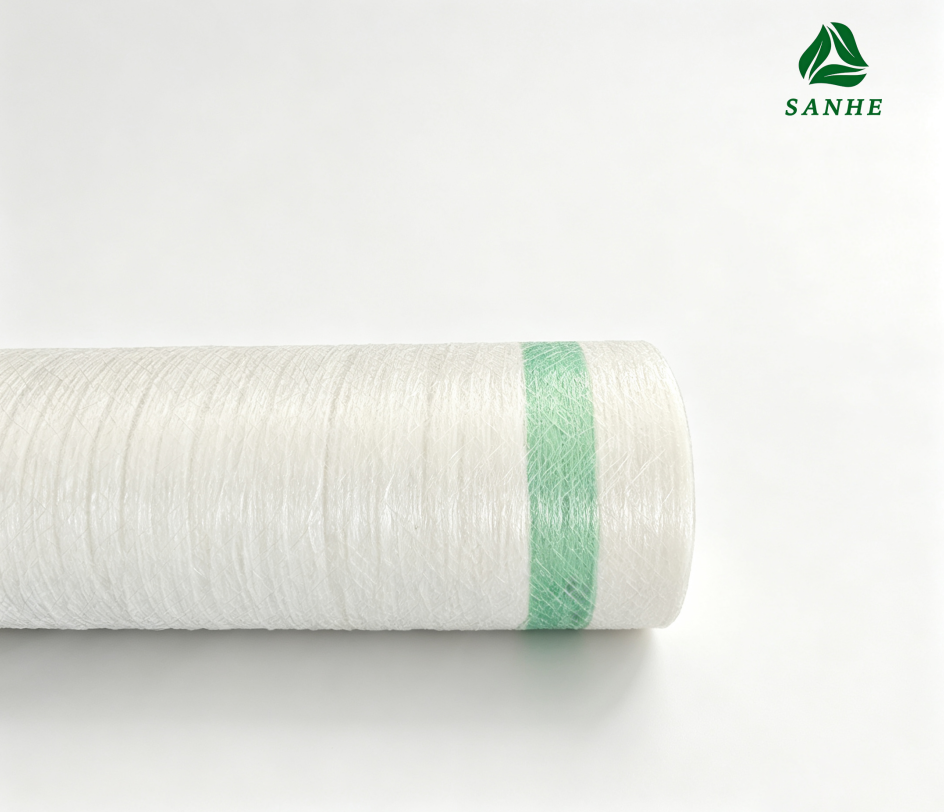
The Ultimate Buyer’s Guide to Bale Net Wrap: Technical Standards That Actually Matter
Let’s be honest—harvest season is an absolute race against the clock. Whether you are a commercial contractor knocking out thousands of round bales a day, or a distributor trying to keep local farmers stocked up, nobody has time for field downtime. It’s your biggest profit killer.
And when you're running modern high-density balers at full speed, the last thing you want to worry about is your baler net wrap. Lower-cost netting looks fine on the roll, but the real headaches start in the field. Bales popping open, edges fraying, and netting rotting under the sun can ruin a perfect harvest.
If you are looking to source baler net wrap that actually does the job without the drama, here are the real technical standards that matter.
1. The Material Science: Why 100% Virgin HDPE Is Non-Negotiable
When it comes to baler net wrap, what it’s made of is everything. If you look at the global market, you’ll find two types of netting: stuff made from 100% virgin pure raw materials, and stuff mixed with cheap recycled plastics.
The Hidden Risks of Recycled Plastics
Recycled plastic is a gamble. It contains tiny weak spots, impurities, and inconsistent molecular bonds. When your baler hits peak chamber pressure, those weak spots become sudden breaking points. If just one single thread snaps during the wrapping cycle, the whole net unzips, and your bale bursts open right on the ramp or while you're loading it onto the trailer.
The 100% Virgin Material Advantage
Premium net wrap uses 100% virgin pure imported HDPE (High-Density Polyethylene). It gives you a perfectly uniform, strong molecular chain. Here is what that means for you in the field:
- Predictable Stretch: The net stretches smoothly and evenly under high tension without getting brittle or thinning out.
- Massive Tensile Strength: It holds tight against heavy, springy crops like tough wheat straw, corn stalks, or wet, heavy silage.
- No Jams: The thickness is flawless from the start of the roll to the very end. That means smooth feeding through your baler's rollers with zero static build-up or birds-nests.
2. Advanced Geometric Design: Edge-to-Edge and Over-the-Edge Technology
Every operator hates "shoulder roll-off." If your net wrap doesn't spread all the way across the bale chamber, the outer edges of your bale stay loose and fluffy. Water gets in, mold grows, and you lose valuable feed.
- True Edge-to-Edge Coverage: A top-tier net wrap is woven to spread completely flat. It locks down the entire width of the bale, giving you perfectly shaped, tightly compressed cylinders every single time.
- Over-the-Edge (OTE) Technology: The best netting has extra-elastic threads on the outermost sides. As the bale drops, the net naturally pulls over the curved corners (the shoulders). This locks down loose crop ears, keeps rain out, and makes the bale perfectly smooth. Plus, if you wrap silage later, there are no sharp stalks sticking out to puncture your silage film.
3. Chemical Longevity: Real 16-Month UV Protection
Agricultural plastics live a brutal life under the blazing sun. Standard baler net wrap gets hit by UV rays, breaks down, and goes chalky and brittle in just a few months.
To prevent this, premium baler net wrap has heavy-duty UV inhibitors mixed directly into the raw HDPE. This guarantees at least 16 months of reliable outdoor storage, ensuring your bales stay tight and the hay stays fresh until feeding day.