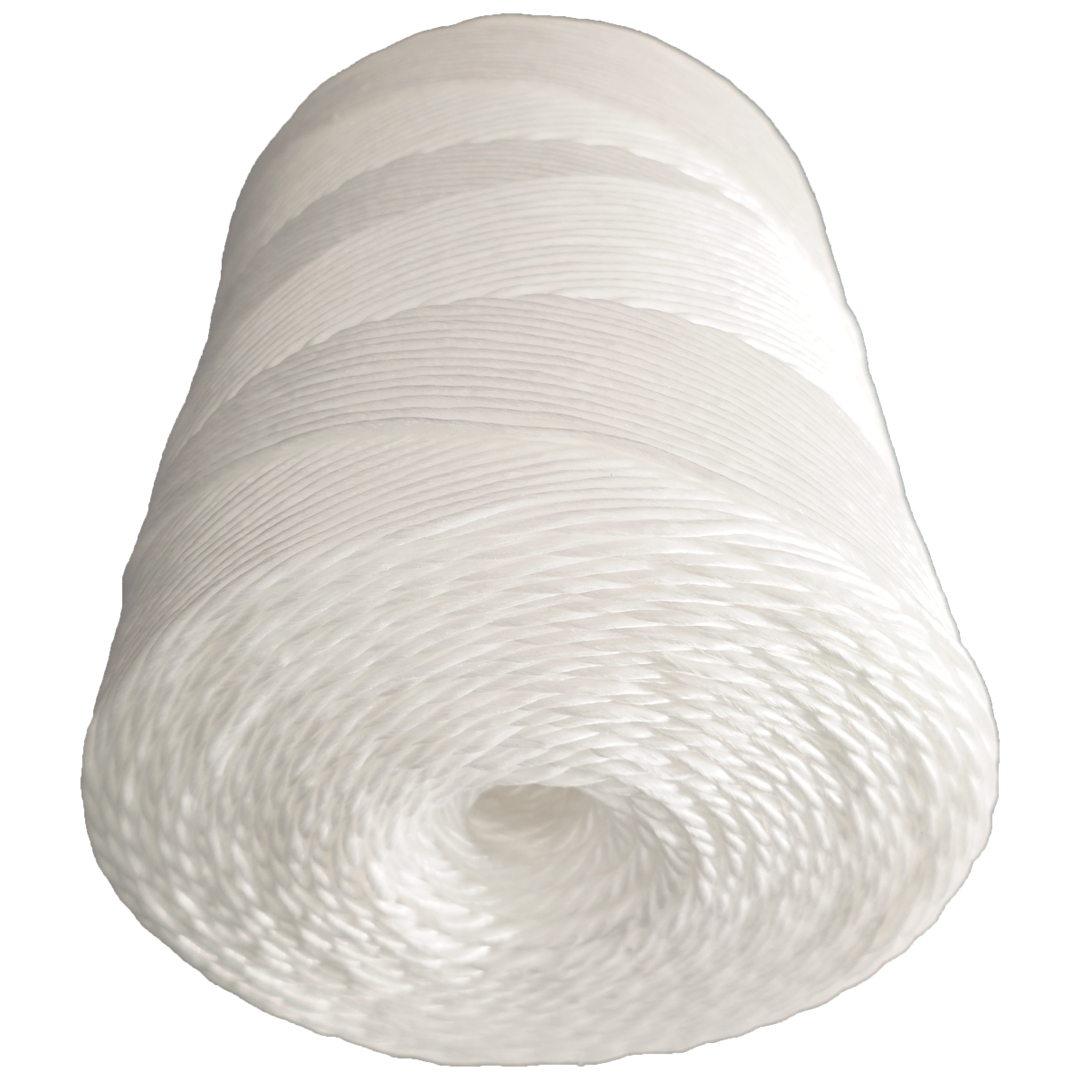
Technical Standards for High-Density Baler Twine
In large-scale agricultural operations, every minute matters. Whether you are a commercial hay contractor baling thousands of acres per day, or a global agricultural distributor supplying local farmers, field downtime is your biggest profit killer.
One of the most frequent causes of delayed harvests and machine failure is sub-standard baler twine. While low-cost options look identical on the shelf, their true cost unfolds in the field through broken knots, unexpected snaps, and mechanical damage. To help commercial buyers optimize their operations and secure their investments, this technical guide breaks down the critical engineering differences between premium, high-performance agricultural twine and cheap, recycled materials.
1. The Material Science: Why 100% Virgin PP is Non-Negotiable
The fundamental engineering characteristic of a reliable agricultural twine is its base polymer consistency. Twines available on the global market generally fall into two categories: those manufactured from 100% virgin polypropylene (PP) and those blended with recycled plastic regrinds.
- The Problem with Recycled Plastics: Recycled polymers inherently contain microscopic molecular inconsistencies and trace impurities. Under the immense linear tension exerted by high-density balers, these structural flaws become sudden breaking points.
- The Virgin PP Advantage: Premium baler twine utilizes 100% virgin polypropylene. Virgin PP provides a completely uniform molecular chain during the extrusion process. This yields consistent strand thickness, predictable tensile behavior, and superior knot-holding capabilities.
2. Mechanical Integrity: The Critical Need for a Joint-Free Structure
One of the most frequent causes of mechanical knotter failure is the presence of unexpected factory knots or splices within a fresh spool of twine.
When an unannounced joint passes through the baler’s high-speed knotter assembly, it creates a sudden gauge deviation. This frequently leads to mis-ties, fraying, or knotter jams. For commercial operators, clearing these jams requires halting operations, resulting in costly field downtime during narrow harvest windows.
Premium industrial production lines must utilize advanced continuous extrusion and precision winding technologies to guarantee a joint-free structure throughout the spool, keeping your machinery running seamlessly.
3. Chemical Longevity: Advanced UV Stabilization Up to 16 Months
Because bundled hay often sits exposed in open fields or unshaded storage yards for months before transit or feeding, its packaging is subject to continuous, intensive solar radiation.
Polypropylene naturally undergoes photo-oxidation when exposed to solar ultraviolet (UV) light, which breaks down the plastic matrix, causing the twine to become brittle and snap. High-performance agricultural twine must incorporate heavy-duty chemical UV inhibitors.
Premium formulations ensure that the twine can withstand prolonged outdoor weathering and intensive sunlight exposure for up to 16 months, protecting the structural integrity of the bale throughout its storage life cycle.
Technical Support and Factory Inquiries
For specific technical data sheet (TDS) requests, custom parameter comparisons, or competitive direct-factory quotes for the upcoming baling season, please contact our export department directly through our website. Our technical team is available to assist wholesale buyers worldwide with precise specifications.