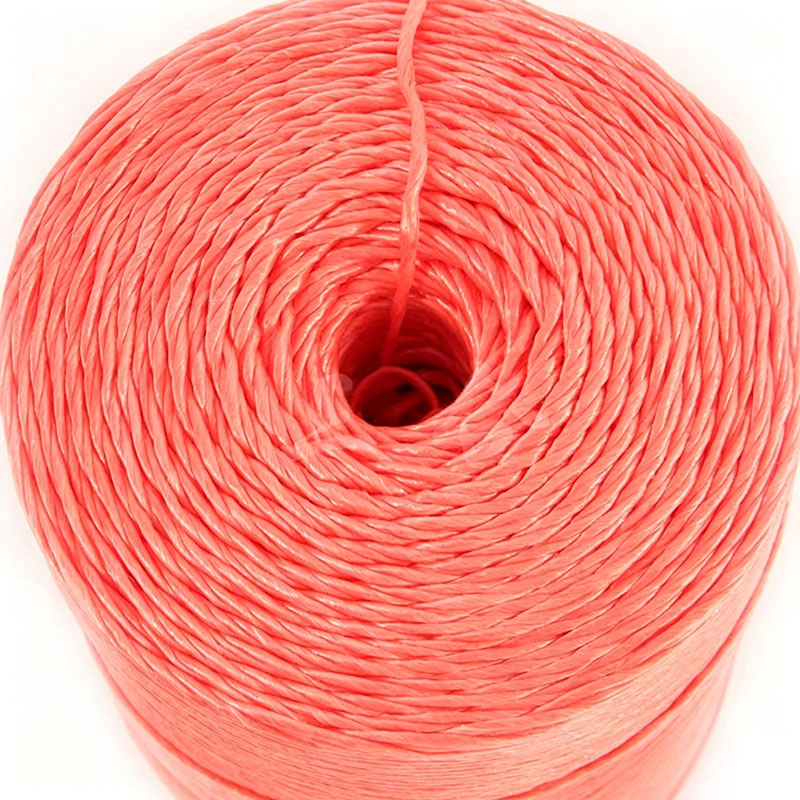
5 Common Reasons Baler Twine Breaks and How to Prevent It
Baler twine is essential for keeping hay and straw bales secure during baling, transportation, and storage. When twine breaks, it can affect bale quality and reduce working efficiency.
So, why does baler twine break? Here are five common reasons.
1. Insufficient Twine Strength
Different crops and bale densities create different levels of tension.
If the twine is not strong enough, it may break when the bale is formed, tied, or ejected.
For high-density bales, choosing high-strength baler twine is especially important.
2. Poor Raw Material Quality
The quality of the raw material directly affects twine performance.
High-quality agricultural baler twine is generally made from virgin polypropylene (PP), which provides consistent strength and diameter.
Lower-quality materials may lead to uneven thickness, weaker twine, and unstable knotting performance.
3. Insufficient UV Protection
Hay and straw bales are often stored outdoors for extended periods.
Long-term exposure to sunlight can gradually reduce the strength of plastic twine. Proper UV protection helps the twine maintain its performance during outdoor storage.
When choosing baler twine, consider both the expected storage period and local climate.
4. Incorrect Baler Settings
Twine breakage is not always caused by the twine itself.
Excessive twine tension, incorrect knotter settings, or overly dense bales can increase stress on the twine.
If breakage occurs repeatedly around the knot, checking the baler's tension and knotter settings is a good place to start.
5. Inconsistent Twine Quality
Consistent diameter, strength, and roll length are important for reliable baling.
If twine specifications vary significantly during production, the knotter may not work consistently.
For professional users and distributors, stable product quality can help reduce unexpected problems during the busy harvesting season.
How to Reduce Baler Twine Breakage?
To reduce twine breakage, consider these key points:
· Choose the right strength for your baling application.
· Use high-quality virgin PP material.
· Select twine with suitable UV protection.
· Check baler tension and knotter settings.
· Work with a supplier that provides consistent quality.
Choose Reliable Baler Twine
At Sanhe, we manufacture agricultural baler twine for square baling applications.
Our twine uses 100% virgin PP material and UV additives, with high-strength options available for demanding baling conditions.
With our own manufacturing facility and experience serving international agricultural markets, we provide stable-quality baler twine for distributors, agricultural dealers, and professional users.
Conclusion
Baler twine breakage can have several causes, from insufficient strength and poor materials to incorrect baler settings.
Choosing the right baler twine strength, material, and UV protection, together with proper machine adjustment, can help improve baling performance and reduce unnecessary downtime.